
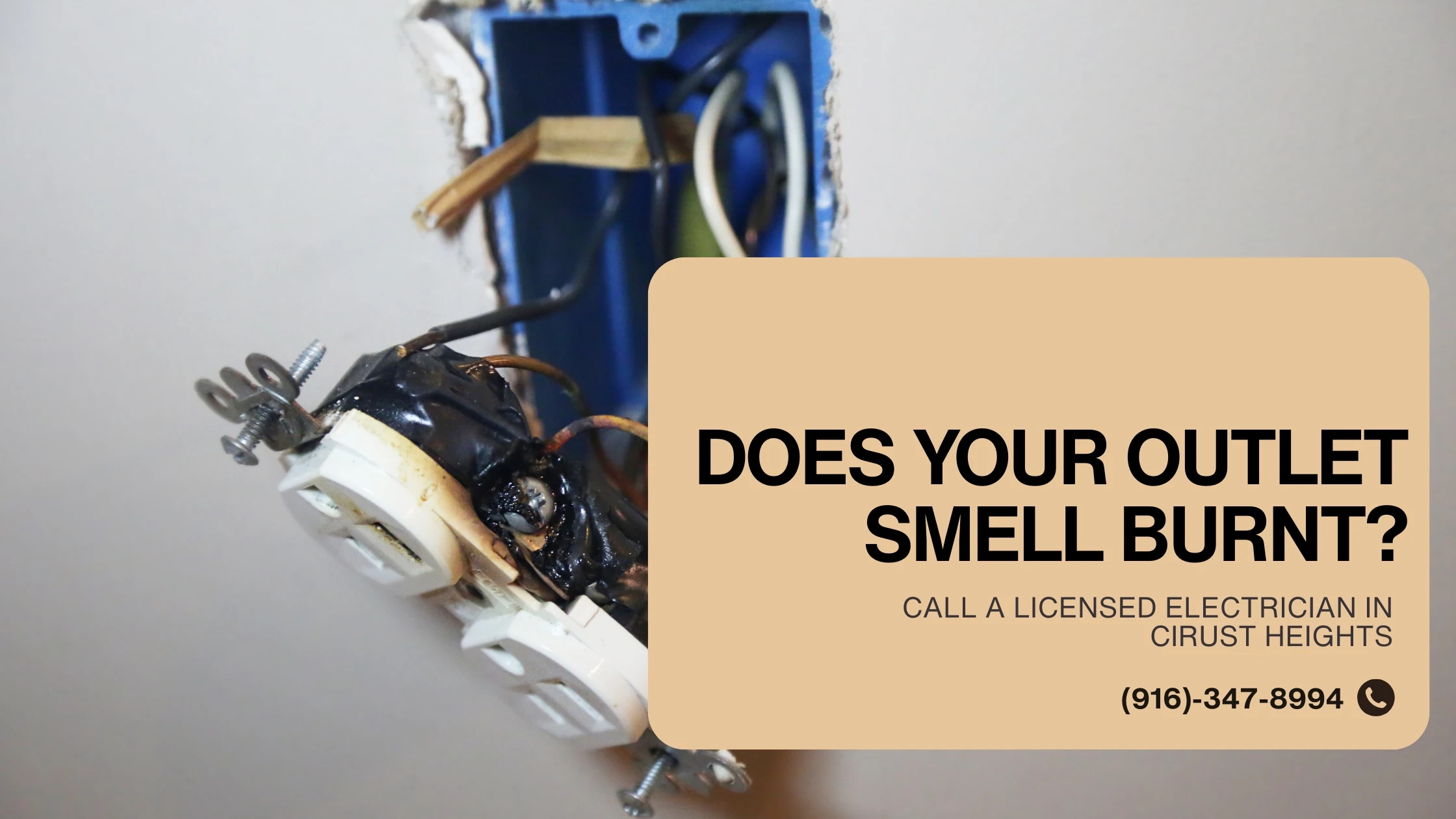
A burning smell near an outlet should be taken seriously.
If you smell something hot, burnt, fishy, or like melting plastic near an outlet, stop using that outlet. Unplug anything connected to it if you can do that safely. If the smell is strong, the outlet feels warm, or you see smoke or burn marks, turn off the circuit breaker and call an electrician.
Don’t keep testing it with another appliance. Don’t plug the same device back in to see if it happens again. That can make the problem worse.
We get these calls from Citrus Heights homeowners all the time. An outlet suddenly smells strange, or a switch that feels warm, or a breaker that keeps tripping when something gets plugged in. Sometimes the issue is a worn-out outlet or a loose wire inside the box that is creating heat. A space heater, microwave, garage freezer, or power strip can also expose a problem on the circuit.
What to Do First If an Outlet Smells Like Burning
Start with safety.
Stop using the outlet. If something is plugged into it and you can unplug it safely, unplug it. If the plug is hot, melted, sparking, or stuck, leave it alone and, if you can do so safely, turn off the breaker.
If you see smoke, flame, or active burning, leave the area and call emergency services.
Do not spray water into the outlet. Do not cover the outlet with furniture and ignore it. Do not use an extension cord from another room as a long-term workaround. The smell may be coming from heat inside the outlet box or wall.
After the outlet is no longer being used, pay attention to what happened before the smell started.
- Was a space heater running?
- Did the smell start when the microwave, AC, or garage equipment turned on?
- Did a breaker trip?
- Is the smell strongest near one outlet, or is it coming from the panel?
Those details help during troubleshooting.
Is a Burning Smell From an Outlet Dangerous?
Yes, it can be dangerous.
A burning smell can come from overheated wiring, damaged insulation, a loose connection, a failing outlet, or an overloaded circuit. The smell may show up before you see smoke or sparks.
A lot of homeowners expect electrical problems to look obvious. Many don’t. An outlet can look normal on the outside while a loose connection inside the box is heating up.
Call a licensed electrician in Citrus Heights if you notice:
- A burning plastic smell
- A fishy or chemical smell near an outlet
- A warm or hot outlet
- Buzzing or crackling
- Sparks
- Burn marks
- A melted plug
- A breaker that keeps tripping
- Lights flickering at the same time
- A smell near the electrical panel
Heat, smell, buzzing, and repeated breaker trips are the signs we don’t like to see ignored.
Loose Wiring Can Create Heat
Loose wiring is a common cause of burning smells around outlets.
When a connection is loose, the electrical flow can become unstable. That creates heat. Over time, the heat can damage the outlet, the wire insulation, or the surrounding parts inside the box.
You may notice the outlet works sometimes and cuts out at other times. A plug may feel loose. The outlet may buzz or crackle. The faceplate may feel warm.
Sometimes there are no obvious signs until the smell shows up.
Loose connections need to be corrected properly. Replacing the outlet without checking the wiring can leave the real problem in place.
The Outlet or Circuit May Be Overloaded
Overloaded outlets and circuits are another common reason for heat and burning smells.
This often happens when a high-demand appliance is plugged into a circuit that already has too much on it. Space heaters are a big one. So are portable AC units, microwaves, power tools, garage freezers, and large kitchen appliances.
Power strips can make this worse. They give people more places to plug things in, while the circuit behind the wall still has the same limit.
In older Citrus Heights homes, we often see rooms being used differently than they were years ago. A bedroom might now be a home office. A garage might have tools, battery chargers, a freezer, and exercise equipment. A kitchen may have more countertop appliances than the original circuit layout was built around.
When the circuit is overloaded, the wiring and outlet can heat up. A breaker may trip, or the outlet may start to smell burnt before the breaker shuts off.
A Damaged Outlet Can Smell Burnt
Outlets wear out.
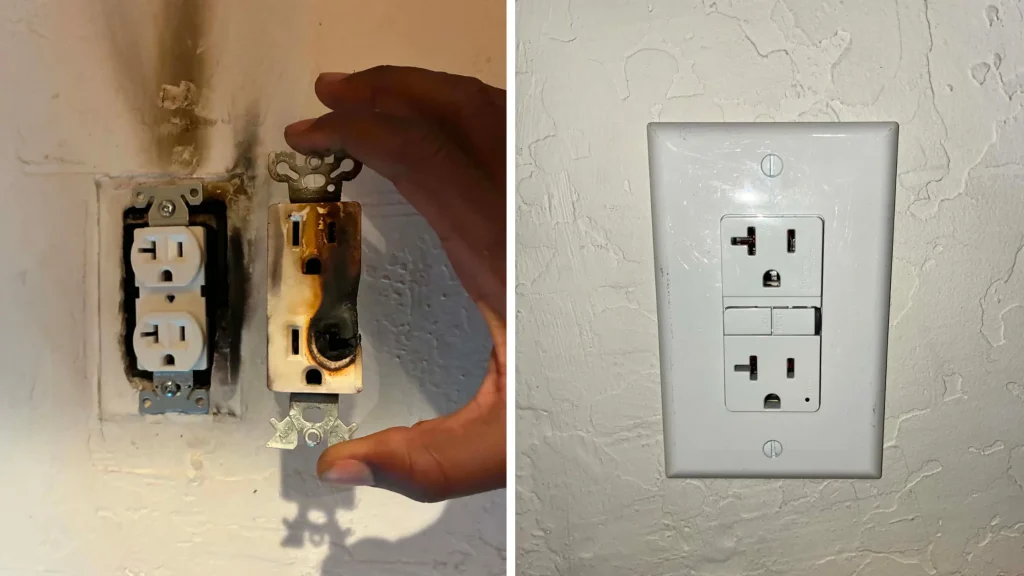
A plug that fits loosely can create heat. A cracked outlet face can expose parts that should be protected. An outlet with burn marks, discoloration, or a melted area should be replaced after the circuit is checked.
You may see signs like:
- Brown or black marks around the plug slots
- A plug that falls out easily
- A cracked outlet face
- Heat around the outlet
- A smell when something is plugged in
- A buzzing sound
- Sparks when plugging something in
If an outlet is damaged, stop using it. The outlet may need to be replaced, and the wiring behind it should be inspected before the repair is finished.
The Device Plugged Into the Outlet May Be the Problem
Sometimes the smell starts with the device, appliance, or cord plugged into the outlet.
A damaged plug, old appliance, cheap charger, worn extension cord, or overloaded power strip can create heat. The outlet may smell burnt because the plug or cord is overheating right at the connection point.
Look at what was plugged in when the smell started.
If the plug is discolored, melted, cracked, or hot, stop using that device. If the outlet also feels warm or smells burnt after the device is removed, have the outlet checked too.
Don’t move the same appliance to another outlet and keep using it. If the device has an internal electrical problem, it can create the same issue somewhere else.
Outdoor Outlets and Moisture Problems
Outdoor outlets, garage outlets, and GFCI outlets can develop problems when moisture gets into the box.
Rain, sprinklers, pressure washing, damaged covers, and worn seals can all cause trouble. Moisture may lead to GFCI trips, corrosion, heat, or a burning smell when the outlet is used.
This can happen around patios, side yards, garages, pool equipment, and exterior walls.
If an outdoor outlet smells burnt or looks wet, stop using it. Keep people away from it and have it inspected. A weatherproof cover or outlet replacement may be needed, and the wiring should be checked for damage.
If the problem is tied to a [GFCI outlet that won’t reset], that circuit needs a closer look before the outlet is used again.
Why an Outlet May Smell Like Fish
A fishy smell near an outlet can be electrical.
Some overheated electrical parts give off a fishy or chemical smell when plastic, insulation, or other materials get hot. People sometimes look for plumbing problems, trash, or something dead in the wall before they think about the outlet.
If the smell is strongest near an outlet, switch, light fixture, or electrical panel, treat it like an electrical issue.
Pay attention to when the smell appears. If it happens when a certain appliance runs, when lights are on, or when a device is plugged in, that pattern matters.
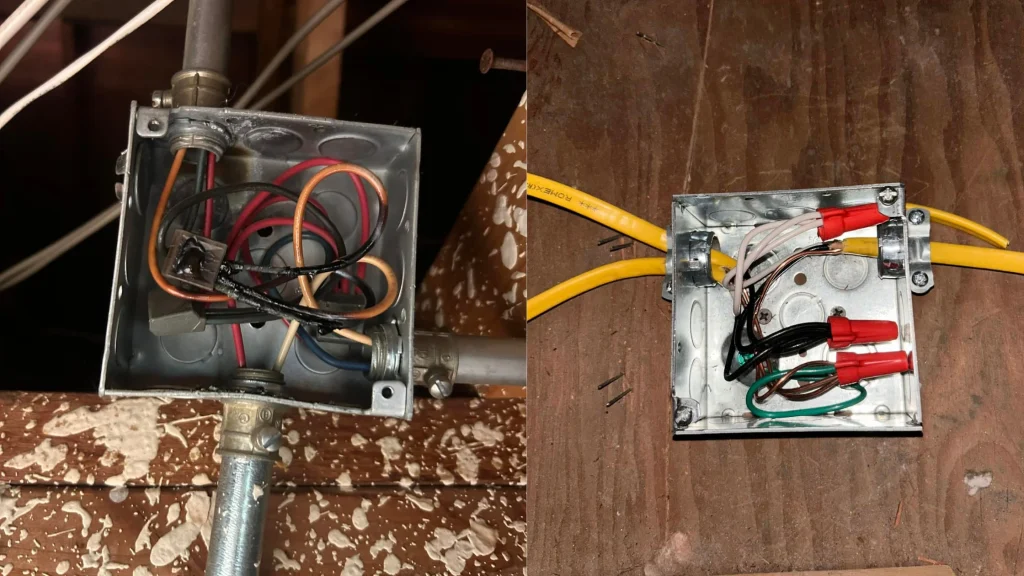
A fishy smell that comes from an electrical area should be checked. Below is another troubleshooting job we did for one of our clients. She noticed a fish smell coming from one of the outlets, and soon enough the outlet exploded. We diagnosed the issue as a circuit overload, and we ended up doing two dedicated circuits.
Burning Smell Near a Light Switch
A burning smell can also come from a switch.
Light switches can heat up when there is a loose connection, overloaded circuit, damaged switch, or wiring issue. Dimmer switches can also run warm, especially when they are connected to the wrong type of lighting or too much load.
A slightly warm dimmer can be normal depending on the setup. A hot switch, burning smell, buzzing, crackling, or discoloration should be checked.
Stop using the switch if it smells burnt or feels hot. Turn off the circuit if you can do that safely.
Burning Smell Near the Electrical Panel
A burning smell near the electrical panel is more urgent.
The panel is where the circuits are fed from. Heat or burning smells there can point to a bad breaker, loose connection, overloaded circuit, damaged bus bar, or another panel issue.
Watch for:
- Buzzing from the panel
- A breaker that feels hot
- Burn marks
- Breakers tripping repeatedly
- Flickering lights across the home
- A smell that gets stronger near the panel
- Crackling sounds
Don’t remove the panel cover yourself. Call an electrician.
If there is smoke or active fire, leave the home and call emergency services first.
What We Often Find on These Calls
On burning-smell calls, the problem is often hidden behind the outlet or inside the panel.
We may find a loose terminal, heat damage on the receptacle, a worn outlet that no longer holds the plug tightly, or a circuit carrying more load than it should. Garage and kitchen outlets are common places for this. So are outlets used for space heaters, freezers, microwaves, portable AC units, and power strips.
Sometimes the outlet is the only damaged part. Sometimes the wiring inside the box has heat damage too. If the circuit is overloaded, the safer fix may be a dedicated circuit instead of replacing the same outlet again.
The repair depends on what we find during diagnosis.
What Homeowners Should Avoid
A few things can make the problem worse.
Do not keep using the outlet. Do not plug in another device to test it. Do not run a space heater from that outlet again. Do not hide the problem behind furniture.
Avoid using extension cords as a workaround. That may move the load to another circuit without solving the issue.
Do not replace the breaker with a larger one. The breaker is sized to protect the wiring. Upsizing it without the right wiring can create a serious hazard.
Do not replace the outlet and assume the issue is fixed if there was heat, smell, sparks, or repeated breaker trips. The wiring and circuit need to be checked.
What Stones Electric Checks During Troubleshooting
When Stones Electric comes out for a burning smell near an outlet, we start with the area where the smell was noticed.
We look at the outlet condition, wiring connections, plug fit, circuit load, breaker condition, and any devices that were connected when the smell started. If the outlet is tied to a GFCI, garage circuit, outdoor outlet, or kitchen circuit, we check the connected parts of that circuit too.
We also look for signs of overheating.
That may include discoloration, melted insulation, damaged outlet parts, loose terminals, bad splices, or heat at the breaker.
Sometimes the fix is simple. Sometimes the circuit needs more work. The important part is finding the source of the heat before replacing parts.
When the Repair May Be Simple
Some outlet smell problems are repaired quickly after diagnosis.
A damaged outlet may need replacement. A loose connection may need to be corrected. A worn switch may need to be changed. A bad plug or appliance may need to be removed from use.
A simple repair still needs to be done carefully. Heat damage can spread behind the outlet where the homeowner can’t see it.
That is why the circuit should be checked before the job is called complete.
When the Problem Points to a Bigger Issue
Some burning smells point to a larger electrical problem.
This is more likely when several outlets feel warm, breakers keep tripping, lights flicker, the panel smells hot, or the same issue comes back after a repair.
The home may have overloaded circuits, older wiring, a panel issue, or a need for a [dedicated circuit installation]. High-demand appliances should not share circuits that were never built for that load.
This comes up with space heaters, garage equipment, kitchen appliances, portable AC units, and EV charging equipment.
If the load is the issue, replacing one outlet may only buy time. The circuit needs to match how the home is being used.
Related Problems Homeowners Often Notice
A burning smell may show up with other symptoms.
- If your circuit breaker keeps tripping, there may be an overload, short, ground fault, bad breaker, or appliance issue on the circuit.
- If your lights flicker when the AC turns on, the home may have a loose connection, voltage drop, panel load issue, or AC startup-load problem.
- If your GFCI outlet won’t reset, the outlet may be detecting moisture, a wiring issue, a downstream fault, or a problem with a device plugged into the circuit.
These problems can overlap. That is why the full circuit needs to be checked instead of only looking at the visible outlet.
Call Stones Electric for Burning Outlet Smells in Citrus Heights
If you smell burning near an outlet, switch, or panel in Citrus Heights, Stones Electric can inspect the circuit and find out what is causing it.
The issue may be a loose connection, damaged outlet, overloaded circuit, faulty device, breaker problem, moisture issue, or panel concern. Once we find the source, we’ll explain the repair clearly before work moves forward.
Need electrical troubleshooting?
Call Stones Electric in Citrus Heights
If you smell burning near an outlet, switch, or panel, Stones Electric can inspect the circuit and find out what is causing the problem.
☎ Call (916) 347-8994FAQs About Burning Smells From Outlets
What should I do if an outlet smells like burning?
Stop using the outlet. Unplug devices if you can do it safely. If the outlet feels warm, the smell continues, or you see smoke or burn marks, turn off the breaker and call an electrician.
Is a burning smell from an outlet dangerous?
Yes, it can be. The smell may come from overheated wiring, melting insulation, a loose connection, a damaged outlet, or an overloaded circuit.
Why does my outlet smell like burning plastic?
A burning plastic smell can come from heated outlet parts, damaged wire insulation, a bad plug, or a device pulling too much power from the circuit.
Why does my outlet smell like fish?
Some overheated electrical parts can smell fishy or chemical. If the smell is strongest near an outlet, switch, light fixture, or panel, have it checked.
Can a warm outlet cause a fire?
A warm outlet can be a warning sign. It may point to overload, loose wiring, or a damaged outlet. Stop using it and call an electrician.
Should I replace the outlet myself?
Call an electrician if there is a burning smell, heat, sparks, burn marks, buzzing, or breaker trips. The circuit should be checked before parts are replaced.
Who should I call in Citrus Heights?
Call Stones Electric at (916) 347-8994 for electrical troubleshooting in Citrus Heights and nearby areas.