
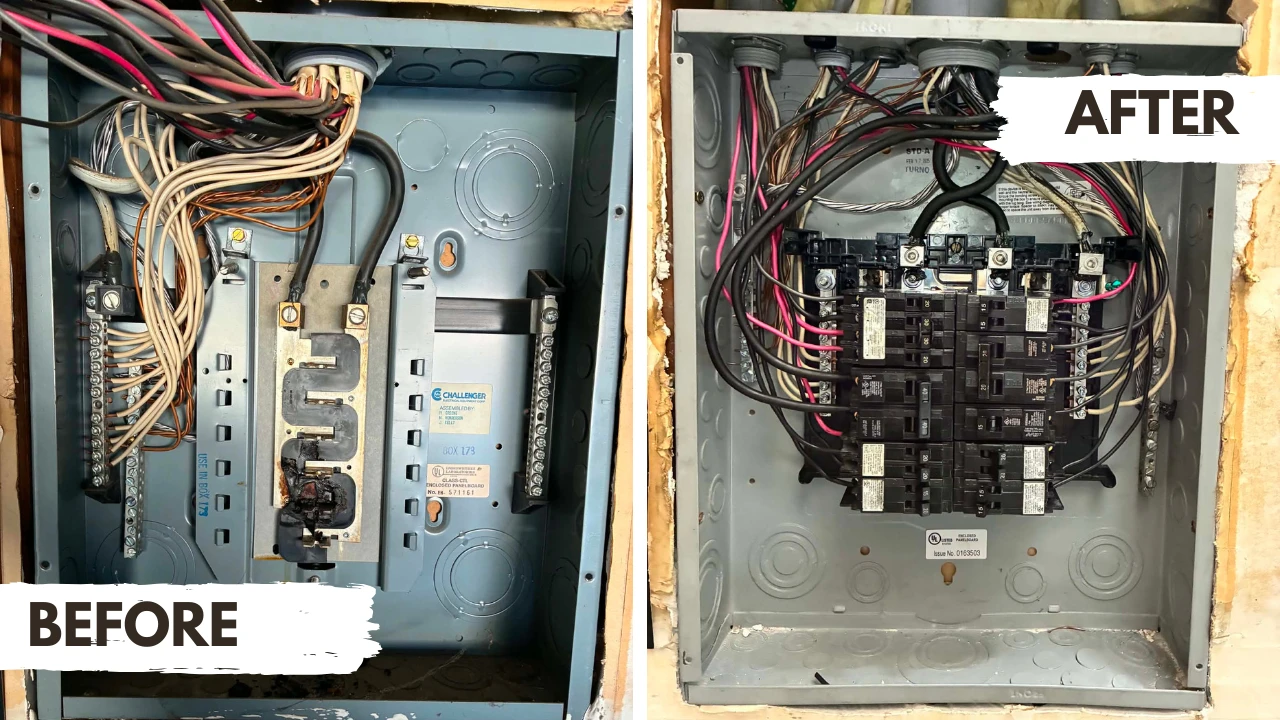
Your electrical panel is the one piece of equipment in your house that touches every light and appliance you own. When it starts acting up, the symptoms show up everywhere else first. Lights flicker in the hallway. The breaker for the kitchen trips every time the microwave and toaster run together. The AC kicks on during a 105-degree July afternoon, and half the house goes dark.
If any of that sounds familiar, this guide walks through what electrical panel Repair in Citrus Heights costs, how to tell whether a repair will solve the problem, and when you’re better off replacing the panel entirely.
Warning Signs Your Panel Needs Attention
Some panel problems announce themselves. Others hide until an inspector or an electrician opens the cover.
Call an electrician promptly if you notice any of these:
- Breakers that trip repeatedly on the same circuit. An occasional trip is the breaker doing its job. A breaker that trips weekly is telling you something is wrong with the circuit, the breaker itself, or the panel behind it.
- A breaker that won’t reset or feels loose in its slot. Worn bus bar connections cause this, and they generate heat every hour the circuit carries a load.
- Warmth, buzzing, or a faint burning smell at the panel. Any of these means arcing or a failing connection. Shut off what you can and make the call the same day.
- Scorch marks or melted insulation visible around breakers or where wires enter the panel.
- Flickering that tracks with appliance use. If the bedroom lights dim whenever the dryer starts, a loose or corroded connection is a likely cause.
- Two-prong outlets and a fuse box instead of breakers. A fuse box dates the whole system, and it predates modern safety requirements by decades.
A panel can also be in trouble without any symptoms at all. Certain brands installed across Citrus Heights in the 1960s and 70s fail dangerously even when everything appears normal. More on that below.
What Panel Repairs Cost in the Citrus Heights Area
Repair pricing depends on what’s actually wrong, but most jobs fall into predictable ranges. These figures reflect what Sacramento-area homeowners typically pay:
| Repair | Typical Cost |
|---|---|
| Replace a single breaker | $150 – $300 |
| Tighten and re-torque connections, replace damaged lugs | $150 – $400 |
| Replace a main breaker | $300 – $600 |
| Repair damaged panel wiring or bus connections | $250 – $700 |
| Full panel replacement (like-for-like) | $1,500 – $3,000 |
| Upgrade to a 200-amp service | $2,500 – $4,500+ |
Two things move these numbers. Panel condition is the first. A clean, code-compliant panel with one bad breaker is a quick job. A crowded panel with double-tapped breakers and brittle insulation takes longer and often reveals additional problems once the cover comes off. Access is the second. Panels buried behind water heaters or built into closets add labor time.
A useful rule of thumb: once repair estimates climb past $1,000 on an older panel, put that money toward replacement instead. You’d be spending near-replacement dollars to extend the life of equipment that’s already at the end of it.
Repair or Replace? How to Decide
Repair makes sense when the panel itself is sound. A failed breaker in a 15-year-old panel with available capacity is a repair. Same for a loose neutral connection or a damaged lug on an otherwise healthy system.
Replacement is the smarter call in a few specific situations:
- The panel is a Federal Pacific, Zinsco, or Sylvania-Zinsco (covered in the next section)
- The panel is 60-amp or 100-amp service, and you’re adding an EV charger, a heat pump, or central AC
- Repairs would exceed roughly $1,000, and the panel is more than 25 years old
- The bus bars show corrosion or heat damage, which no breaker swap can fix
- You still have a fuse box
- Breaker slots are full, and you need new circuits
Household electrical demand in this area keeps climbing. Summer AC loads in Citrus Heights are heavy for four to five months a year, and more homeowners are adding EV chargers every year. A panel that was adequate in 1985 often isn’t adequate now, and repairing it just postpones a replacement you’ll end up paying for anyway.
The Federal Pacific and Zinsco Problem in Citrus Heights Homes.
Much of Citrus Heights was built out between the 1950s and the late 1970s, in the tracts around Auburn Boulevard, Greenback Lane, and Sunrise Boulevard. Those decades were the peak installation years for two panel brands that electricians and home inspectors now flag on sight.
Federal Pacific Electric (FPE) Stab-Lok panels have a documented history of breakers that fail to trip under overload. A breaker that doesn’t trip leaves an overheating wire connected to full power, which is the exact condition breakers exist to prevent. Independent testing found failure rates far above any acceptable standard, and many insurers now surcharge or decline homes that still have one.
Zinsco (and later GTE-Sylvania-Zinsco) panels have a different failure mode. The breakers can appear switched off while the circuit stays energized, and the aluminum bus bars corrode where breakers clip on, causing overheating at the connection point.
Neither brand can be meaningfully repaired. Replacement breakers are no longer manufactured by the original companies, and aftermarket substitutes don’t fix the bus bar design. If your home has either panel, replacement is the only real option on the table.
You can check without opening anything. The brand name is usually printed on the panel door or the label inside it. FPE panels often have “Stab-Lok” on the breakers themselves, and Zinsco breakers have distinctive colored switch handles. If you’re selling a home with one of these panels, plan on the buyer’s inspector flagging it and asking for replacement as part of negotiations.
Why Panel Work Isn’t a DIY Job
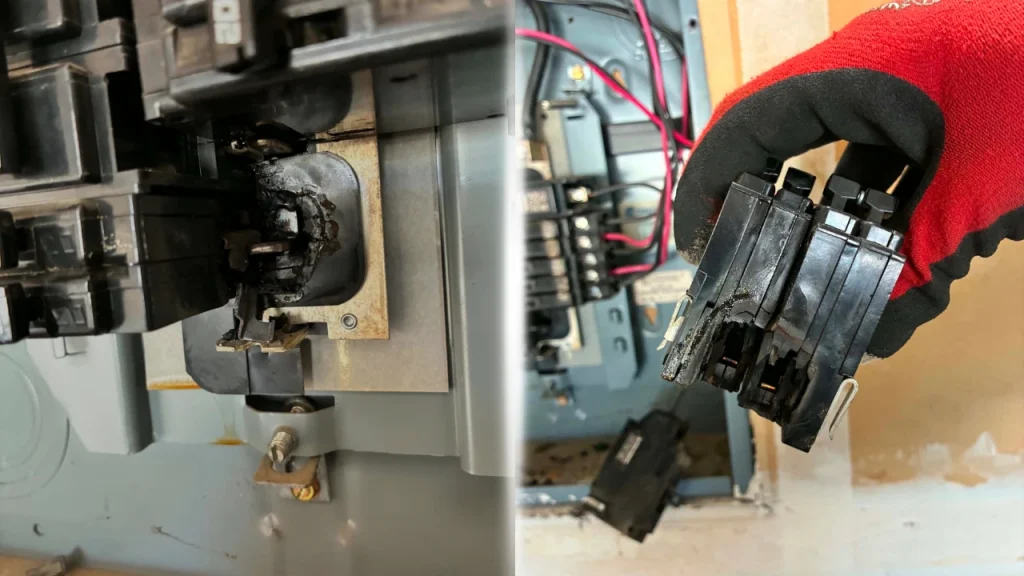
Plenty of electrical tasks are reasonable for a careful homeowner. Panel interiors aren’t one of them, and it’s worth understanding why rather than taking it on faith.
Shutting off the main breaker de-energizes the branch circuits, but the service conductors feeding the main breaker stay live. Those lugs carry the full utility supply, and no switch in your house turns them off. Only SMUD can kill power at the meter, and that live section is where serious DIY injuries happen, including to people who understood the risk in theory.
There’s a paperwork problem too. Panel replacement in Citrus Heights requires a permit from the city’s Building Division and a passed inspection. Unpermitted panel work surfaces during home sales and complicates insurance claims after an electrical fire. Correcting it later usually costs more than doing it properly would have.
Swapping a single breaker sits in a gray area; some experienced homeowners handle it themselves. Everything past that belongs to a licensed electrician.
What to Expect During a Panel Replacement
A straightforward replacement is typically a one-day job. The sequence looks like this:
- Your electrician pulls the permit and coordinates with SMUD to disconnect power at the meter.
- The old panel comes out, and the new one goes in, usually in the same location to avoid rewiring costs.
- Circuits are relanded on new breakers and torqued to spec, with each one labeled.
- SMUD restores power, and the city inspector signs off, sometimes the same day, sometimes within a few days depending on scheduling.
Expect to be without power for most of the workday. If the panel location has to move, or if the inspection reveals wiring that needs correction, the timeline stretches. A good electrician will identify those issues in the estimate before the old panel is out of the wall.
Frequently Asked Questions
How long does an electrical panel last?
Most electrical panels serve reliably for 25 to 40 years. Heat, sustained heavy loads, and moisture in garages or exterior installations can shorten that lifespan. Age alone does not condemn a panel, but a 40-year-old panel deserves a professional inspection even if it appears to be working properly.
Will my homeowner’s insurance cover panel repairs?
Homeowner’s insurance policies generally cover electrical panel damage caused by a covered event, such as a lightning strike or fire. They typically do not cover normal wear, age, deterioration, or required code upgrades. Some insurance carriers may require the replacement of FPE or Zinsco panels as a condition of coverage. Check your policy or speak with your insurance provider before assuming the work is covered.
Can I add circuits to my existing panel instead of replacing it?
Sometimes. It depends on whether the panel has open breaker slots and whether the electrical service has enough capacity for the additional load. An electrician can inspect the panel and determine what it can safely support. Tandem breakers may occasionally provide additional space in an approved panel, but they are not a substitute for a service or panel upgrade when the home needs more electrical capacity.
Do I need a permit for electrical panel work in Citrus Heights?
Basic breaker replacement may not require a permit, depending on the scope of the work. Electrical panel replacements and service upgrades generally require a permit through the City of Citrus Heights Building Division, and the completed work must pass inspection. Your electrician can confirm the permit requirements for your project.
Get Your Electrical Panel Looked At
Stones Electric is based right here in Citrus Heights, and panel repairs and replacements are core work for us. If your breakers keep tripping, or you just want a straight answer on repair versus replacement, call us at 916-347-8994. We’ll give you an honest assessment and a written estimate before any work begins.
+1(916)-347-8994